Highlights

Nanjing is the capital of China's Jiangsu Province, and a city with a prominent place in Chinese history and culture. Nanjing served as the capital of China during several historical periods, including as the former capital city of Republic of China, and is listed as one of the Four Great Ancient Capitals of China. Nanjing is also one of the fifteen sub-provincial cities in the People's Republic of China's administrative structure, enjoying jurisdictional and economic autonomy only slightly less than that of a province.
Located in the lower Yangtze River drainage basin and Yangtze River Delta economic zone, Nanjing has always been one of China's most important cities. Apart from having been the capital of China for six dynasties and of the Republic of China, Nanjing has also served as a national hub of education, research, transportation and tourism throughout history. With an urban population of over five million, it is also the second largest commercial center in the East China region, after Shanghai.
Being one of the four ancient capitals of China, Nanjing has always been a cultural center attracting intellectuals from all over the country. In the Tang and Song dynasties, Nanjing was a place where poets gathered and composed poems reminiscent of its luxurious past; during the Ming and Qing Dynasties, the city was the official imperial examination center for the Jiangnan region, again acting as a hub where different thoughts and opinions converged and thrived.
Today, with a long cultural tradition and strong support from local educational institutions, Nanjing is commonly viewed as a “city of culture” and one of the more pleasant cities to live in China.
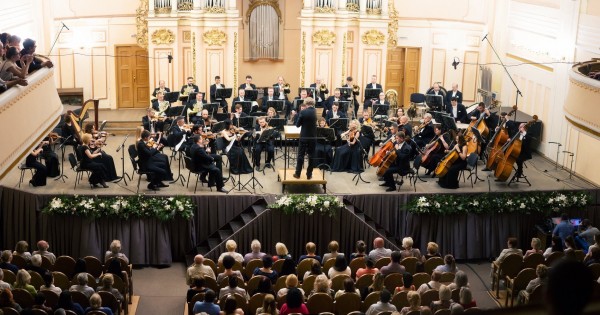
Some of the leading art groups of China are based in Nanjing; they include: Qianxian Dance Company, Nanjing Dance Company, Jiangsu Peking Opera Institute, Nanjing Xiaohonghua Art Company are just a few to list.
Jiangsu Province Kun Opera is one of the best theatres for Kunqu, China's oldest stage art. It is considered a conservative and traditional troupe. Nanjing also has professional opera troupes for the Yang, Yue (shaoxing), Xi and Jing (Chinese opera varieties) as well as Suzhou pingtan, spoken theatre, and puppet theatre.
Jiangsu Art Gallery is the largest gallery in Jiangsu Province, presenting some of the best traditional and contemporary art pieces of China; many other smaller-scale galleries, such as Red Chamber Art Garden and Jinling Stone Gallery, also have their own special exhibitions
Festivals
Many traditional festivals and customs were observed in the old times, which included climbing the City Wall on January 16, bathing in Qing Xi on March 3, hill hiking on September 9 and others (the dates are in Chinese lunar calendar). Almost none of them, however, are still celebrated by modern Nanjingese.
Instead, Nanjing, as a popular tourist destination, hosts a series of government-organised events throughout the year. The annual International Plum Blossom Festival held in Plum Hill, the largest plum collection in China, attracts thousands of tourists both domestically and internationally. Other events include Nanjing Baima Peach Blossom and Kite Festival, Jiangxin Zhou Fruit Festival and Linggu Temple Sweet Osmanthus Festival.
Most of Nanjing's major theatres are multi-purpose, used as convention halls, cinemas, musical halls and theatres on different occasions. The major theatres include the People's Convention Hall and the Nanjing Arts and Culture Center.
A new cinema, Nanjing Shangying-Warner Cinema Complex, was opened in 2004, as the first modern cinema complex in Nanjing. it has become a must-visit for movie enthusiasts.

China

China is situated in eastern Asia, bounded by the Pacific to the east. The third largest country in the world after Canada and Russia, it has an area of 9.6 million square kilometers, which is one-fifteenth of the world's landmass.

China is a vast land, rich in tourism resources. It comes out in front in the world in scenic spots and historical sites, spectacular landscapes, and colorful and varied national customs.
China, one of the world's most ancient civilizations, has a recorded history of nearly 4,000 years.

Top